
Introduction
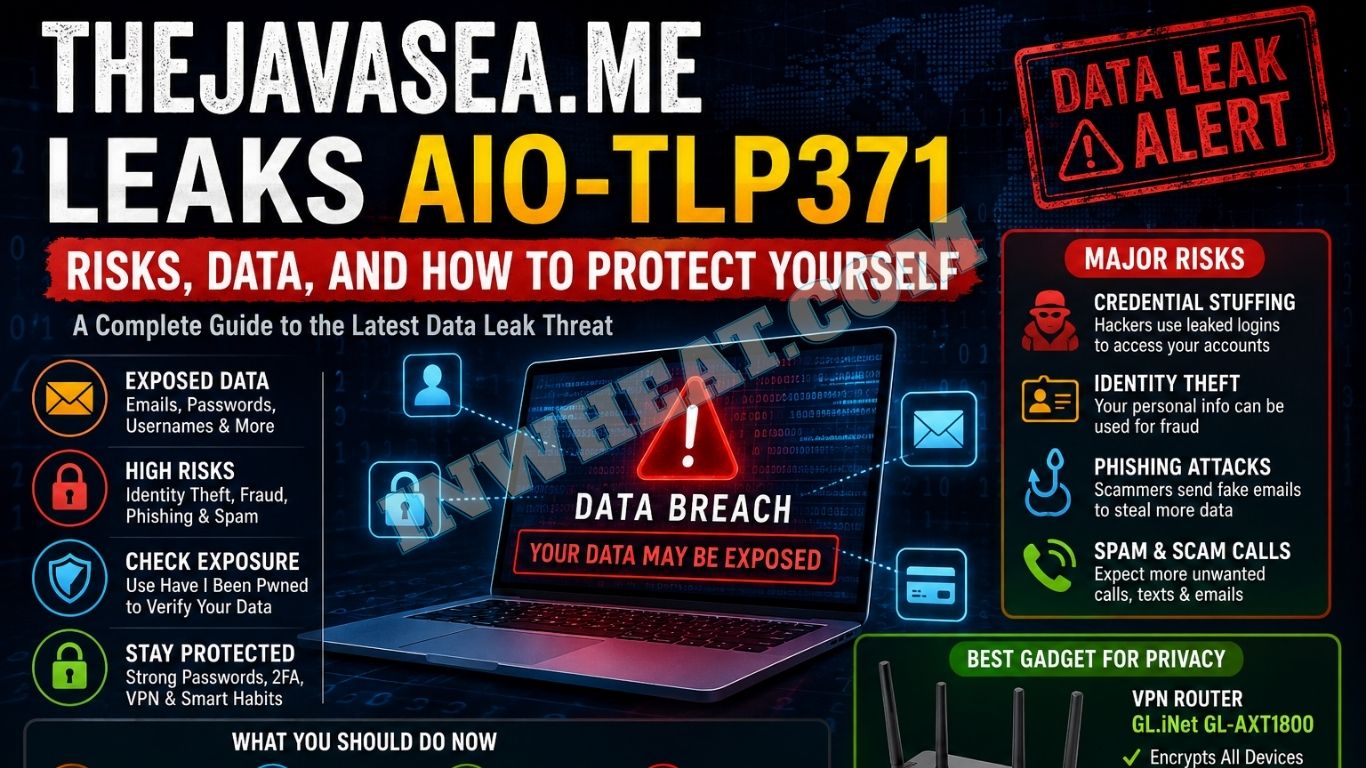
Personal data leaks have become one of the biggest cybersecurity threats in the modern digital world. Every day, millions of users trust websites, applications, and online services with their private information, including email addresses, passwords, phone numbers, payment details, and browsing activity. Unfortunately, not every platform protects that information properly. As a result, large-scale data exposures continue to increase across the internet.One keyword currently gaining attention in privacy and cybersecurity discussions is thejavasea.me leaks aio-tlp371. The phrase refers to a reportedly exposed collection of compiled data associated with thejavasea.me, a platform often discussed in relation to leaked digital content. The incident has raised concerns because the leaked package allegedly combines information from multiple breaches into one large dataset, making it more dangerous than isolated leaks.
Digital privacy communities are paying close attention to incidents like this because aggregated leak databases can dramatically increase the risk of account hacking, phishing attacks, spam campaigns, and identity theft. Even users who believe they have done nothing wrong may still become victims simply because a service they used failed to secure its systems properly.
This article explains what thejavasea.me leaks aio-tlp371 means, how these leak packages work, the risks connected to exposed data, and the practical cybersecurity steps every internet user should take immediately. You will also learn about privacy tools, password management practices, VPN routers, and other important digital protection methods that can reduce long-term risk.
What Is thejavasea.me Leaks AIO-TLP371?
Understanding the Meaning of the Keyword
The term thejavasea.me leaks aio-tlp371 refers to a reported data exposure package linked to thejavasea.me. According to discussions within online privacy forums and cybersecurity communities, this package allegedly contains compiled datasets gathered from multiple online breaches and exposed without authorization.
The keyword itself has become increasingly searched because users want to understand whether their personal information could be included inside the leaked data. In many modern leak incidents, people discover that their credentials were exposed months or even years earlier without their knowledge. As awareness around cybersecurity grows, users are becoming more proactive about checking their exposure status.
The phrase includes multiple technical identifiers. “AIO” stands for “All In One,” which usually indicates that several datasets from different breaches were merged together into a single collection. “TLP371” appears to function as a package identifier within a broader series of leak compilations.
Search interest around thejavasea.me leaks aio-tlp371 has also increased because incidents involving aggregated personal information are far more dangerous than single-source breaches. When usernames, passwords, email addresses, IP addresses, and other details are combined together, attackers can create highly effective profiles for phishing, credential stuffing, and identity fraud attempts.
Understanding these incidents helps internet users recognize the importance of strong passwords, privacy awareness, and proactive digital security practices.
What Does “AIO” Mean?
In cybersecurity and leak communities, “AIO” stands for All In One. This term is used for compiled leak packages that gather information from multiple different breaches and combine them into one massive database. Instead of exposing data from only one website or service, AIO collections merge credentials from many platforms simultaneously.
This makes AIO packages especially dangerous. For example, one breach may expose your email address while another reveals a password from a different website. Separately, those leaks may seem limited. However, when attackers merge them into a combined package like thejavasea.me leaks aio-tlp371, they can cross-reference the data to identify reused passwords and connected accounts.
Aggregated datasets increase the success rate of cyberattacks dramatically. Hackers often use automated tools that test leaked credentials across banking apps, social media accounts, gaming platforms, streaming services, and email providers. If users repeat passwords across platforms, attackers may gain access to multiple accounts quickly.
AIO packages are also attractive to cybercriminals because they simplify data collection. Instead of searching through separate breach databases individually, attackers can access millions of records in a single location. This creates a powerful resource for spam campaigns, phishing operations, identity theft, and financial fraud.
For ordinary users, the existence of AIO leak packages highlights the importance of password uniqueness, two-factor authentication, and regular breach monitoring. Even older breaches can become dangerous again once their information is compiled into new leak collections.
Understanding TLP371
The “TLP” portion of thejavasea.me leaks aio-tlp371 likely references the Traffic Light Protocol, a cybersecurity classification system designed to control how sensitive information is shared. TLP categories help organizations determine who can access certain information and how widely it can be distributed.
Cybersecurity professionals commonly use classifications such as TLP:RED, TLP:AMBER, TLP:GREEN, and TLP:CLEAR to label information sensitivity levels. When data intended for restricted circulation becomes publicly accessible, it represents a serious failure in information handling or security controls.
In the context of aio-tlp371, the number “371” appears to identify a specific release or dataset within a broader sequence. Similar naming conventions are often used in underground leak communities to organize multiple data packages.
The exposure of restricted or private information creates significant risks because attackers gain access to details never intended for public viewing. Once data spreads online, it becomes extremely difficult to remove entirely. Files are often copied, mirrored, and redistributed across multiple websites rapidly.
This is why incidents like thejavasea.me leaks aio-tlp371 receive attention from cybersecurity researchers and privacy advocates. They demonstrate how quickly sensitive data can move beyond controlled environments and become available to unauthorized individuals.
For users, the most important lesson is that online privacy depends not only on personal caution but also on the security standards of the services they use every day.
Why the Incident Gained Attention
Thejavasea.me leaks aio-tlp371 gained attention primarily because it represents a growing trend in modern cybersecurity threats: large-scale aggregated data exposure. Privacy communities, cybersecurity researchers, and ordinary internet users increasingly discuss such incidents because the consequences can affect millions of people simultaneously.
One major reason the incident attracted discussion is the possibility that multiple breach sources were combined together. This significantly increases the usefulness of the data for attackers. Combined datasets allow cybercriminals to connect usernames, passwords, phone numbers, and email addresses into detailed profiles that can be used for targeted attacks.
Another factor is public awareness around online privacy. Many users now understand that data breaches are not isolated technical problems affecting only large companies. Instead, these incidents directly impact personal safety, financial security, and online identity protection.
Digital communities on forums and cybersecurity blogs frequently discuss incidents like aio-tlp371 because users want to know whether they should update passwords, enable additional security measures, or monitor accounts for suspicious activity.
The rise in phishing attacks and identity theft scams has also made leak-related discussions more urgent. When attackers possess accurate personal information, fraudulent emails and fake login pages become far more convincing. Victims may unknowingly provide additional sensitive details because the messages appear legitimate.
Ultimately, the attention surrounding thejavasea.me leaks aio-tlp371 reflects broader concerns about internet privacy, weak platform security, and the increasing commercialization of personal data across the digital world.
How thejavasea.me Became Associated With Data Leaks
Background of thejavasea.me
Thejavasea.me has become known online due to discussions surrounding leaked digital content and compiled datasets. Websites connected with leak distribution often gain attention when users search for exposed databases, unauthorized files, or cybersecurity incidents related to personal information exposure.
Although many such platforms operate in legally questionable environments, they continue attracting traffic because leaked data has become a large underground economy. Cybercriminals, scammers, and even curious users search for information connected to breaches, often without understanding the associated risks.
The reason people search for terms like thejavasea.me leaks aio-tlp371 is usually concern about personal exposure. Internet users want to know whether their credentials, contact details, or private data may have appeared in a leak package. This reflects increasing public awareness around cybersecurity and digital identity protection.
However, visiting leak-related platforms carries significant dangers. Many websites connected to unauthorized content distribution may contain malware, deceptive advertisements, malicious downloads, or phishing traps designed to compromise visitors further. Some pages attempt to trick users into downloading infected files disguised as breach databases or privacy tools.
From a cybersecurity perspective, the popularity of leak-related keywords demonstrates how widespread data exposure incidents have become. Instead of isolated events affecting only large corporations, breaches now impact social media users, gamers, shoppers, students, businesses, and ordinary internet users worldwide.
Understanding the role of websites associated with leak discussions helps users recognize why online security practices are more important today than ever before.
What Kind of Data Is Usually Found in AIO Leak Packages?
Commonly Exposed Information
AIO leak packages typically contain large volumes of personal and account-related information collected from multiple breach sources. The most common records found in these datasets include email addresses, passwords, usernames, login credentials, phone numbers, and IP addresses.
Email-password combinations are especially valuable to attackers because they allow automated login attempts across multiple websites. Many users unfortunately reuse passwords across different platforms, making credential stuffing attacks highly effective.
Usernames from gaming services, streaming platforms, social media sites, and online forums are also commonly included. Attackers can use these details to identify linked accounts or impersonate users in phishing campaigns.
Phone numbers exposed in leak packages may later be targeted through scam calls, spam messages, or SMS phishing attacks. In some cases, attackers attempt SIM swap fraud to gain control over mobile accounts linked to banking or authentication services.
IP addresses and location-related metadata can reveal additional information about a user’s browsing habits, approximate geographic area, or internet provider. While less dangerous on their own, these details become more concerning when combined with other exposed records.
The true danger of packages like thejavasea.me leaks aio-tlp371 lies in how these details are combined together. Separate breaches may individually reveal limited information, but merged databases create detailed digital profiles that attackers can exploit much more effectively.
For users, this highlights why strong passwords, account separation, and privacy-focused habits are essential parts of modern internet safety.
Major Risks Linked to thejavasea.me Leaks AIO-TLP371
Credential Stuffing Attacks
Credential stuffing is one of the most common and dangerous consequences of modern data leaks. In these attacks, cybercriminals use automated software to test leaked username-password combinations across many popular websites and apps simultaneously.
If a user reuses passwords across multiple accounts, attackers may gain access to several services quickly. For example, a password leaked from a small gaming website could later unlock an email account, social media profile, or even financial service if the same credentials are reused elsewhere.
Thejavasea.me leaks aio-tlp371 reportedly involves compiled datasets, which increases credential stuffing risks significantly. Attackers benefit from larger databases because they can automate login attempts at massive scale.
Successful credential stuffing attacks may result in stolen social media accounts, unauthorized purchases, financial fraud, or access to private communications. In some cases, compromised accounts are sold on underground marketplaces for additional profit.
Many users underestimate the importance of password uniqueness until after an account becomes compromised. However, preventing credential stuffing is relatively simple with good cybersecurity habits. Unique passwords for every platform, combined with two-factor authentication, dramatically reduce attack success rates.
Password managers make this process easier by securely generating and storing strong credentials automatically. Users no longer need to memorize dozens of complex passwords manually.
Credential stuffing demonstrates why even “minor” breaches matter. A leaked password from years ago can still create serious problems if it remains reused across important accounts today.
Immediate Security Steps You Should Take
Change Your Passwords Immediately
If you suspect your information may appear in a leak package like thejavasea.me leaks aio-tlp371, changing passwords should be your first priority. Begin with your most important accounts, including email services, banking platforms, social media profiles, cloud storage, and payment apps.
Strong passwords should be long, unique, and difficult to guess. Avoid using birthdays, names, or repeated patterns. Modern cybersecurity experts recommend passphrases that combine unrelated words, numbers, and symbols.
The biggest mistake users make is password reuse. Even if one platform has weak security, using unique passwords prevents attackers from accessing unrelated accounts.
Password managers provide one of the easiest ways to improve account security. Tools such as Bitwarden, 1Password, and Proton Pass can generate secure passwords automatically while storing them safely behind one master login.
Changing passwords regularly is also beneficial after major breach announcements. Even if you are unsure whether your information was exposed, updating credentials reduces long-term risk.
Security should always begin with email accounts because email access often allows attackers to reset passwords on other platforms. Protecting your email address protects the rest of your digital identity as well.
Strong password hygiene remains one of the simplest yet most effective cybersecurity practices available to ordinary internet users today.
Best Gadget Recommendation for Privacy Protection
Why a VPN Router Matters
A VPN router is one of the most underrated cybersecurity tools for protecting digital privacy at home. Unlike a standard VPN app installed on a single smartphone or laptop, a VPN router encrypts internet traffic for every connected device across the entire network.
This means smartphones, tablets, smart TVs, gaming consoles, laptops, and IoT devices all benefit from encrypted traffic automatically. Users do not need separate VPN installations on each device individually.
VPN routers help protect privacy by masking the user’s real IP address and encrypting browsing activity. This makes it harder for advertisers, trackers, internet providers, and malicious actors to monitor online behavior.
After incidents like thejavasea.me leaks aio-tlp371, additional privacy layers become increasingly valuable. Even if personal information exists inside leaked datasets, encrypted browsing reduces exposure to tracking and targeted attacks.
One highly recommended option is the GL.iNet GL-AXT1800. This compact VPN router supports multiple VPN protocols, open-source firmware, and advanced privacy customization features while remaining user-friendly for non-technical users.
VPN routers are especially useful in households with many connected devices. Instead of configuring security separately for every gadget, users protect the entire network through one centralized setup.
Although VPNs cannot erase leaked information from the internet, they help reduce additional tracking, monitoring, and exposure risks moving forward. Combined with strong passwords and two-factor authentication, VPN routers form an excellent foundation for modern digital privacy protection.
Final Thoughts
Why Online Privacy Can No Longer Be Ignored
Thejavasea.me leaks aio-tlp371 highlights a growing reality of the digital era: personal information is constantly at risk online. Data leaks are no longer rare events affecting only large corporations. They now impact ordinary users across gaming platforms, shopping websites, social media apps, and countless online services.
As more personal information moves online, attackers gain more opportunities to exploit weak passwords, outdated systems, and poor security practices. Aggregated leak packages make these threats even more serious because they combine information from multiple breaches into unified datasets that are easier to weaponize.
However, awareness and preparation significantly reduce the risk. Simple cybersecurity habits such as using unique passwords, enabling two-factor authentication, checking breach exposure regularly, and investing in privacy tools can dramatically improve personal security.
Users should also remain cautious when visiting unknown websites, downloading files, or clicking suspicious links. Many phishing attacks succeed because attackers exploit urgency, fear, or trust rather than technical weaknesses alone.
The most important lesson from incidents like thejavasea.me leaks aio-tlp371 is that cybersecurity is no longer optional. Digital privacy has become an essential part of everyday internet use.
By staying informed, practicing better security habits, and taking proactive protective measures, users can reduce exposure risks and maintain stronger control over their online identity in an increasingly connected world.










Leave a Reply