
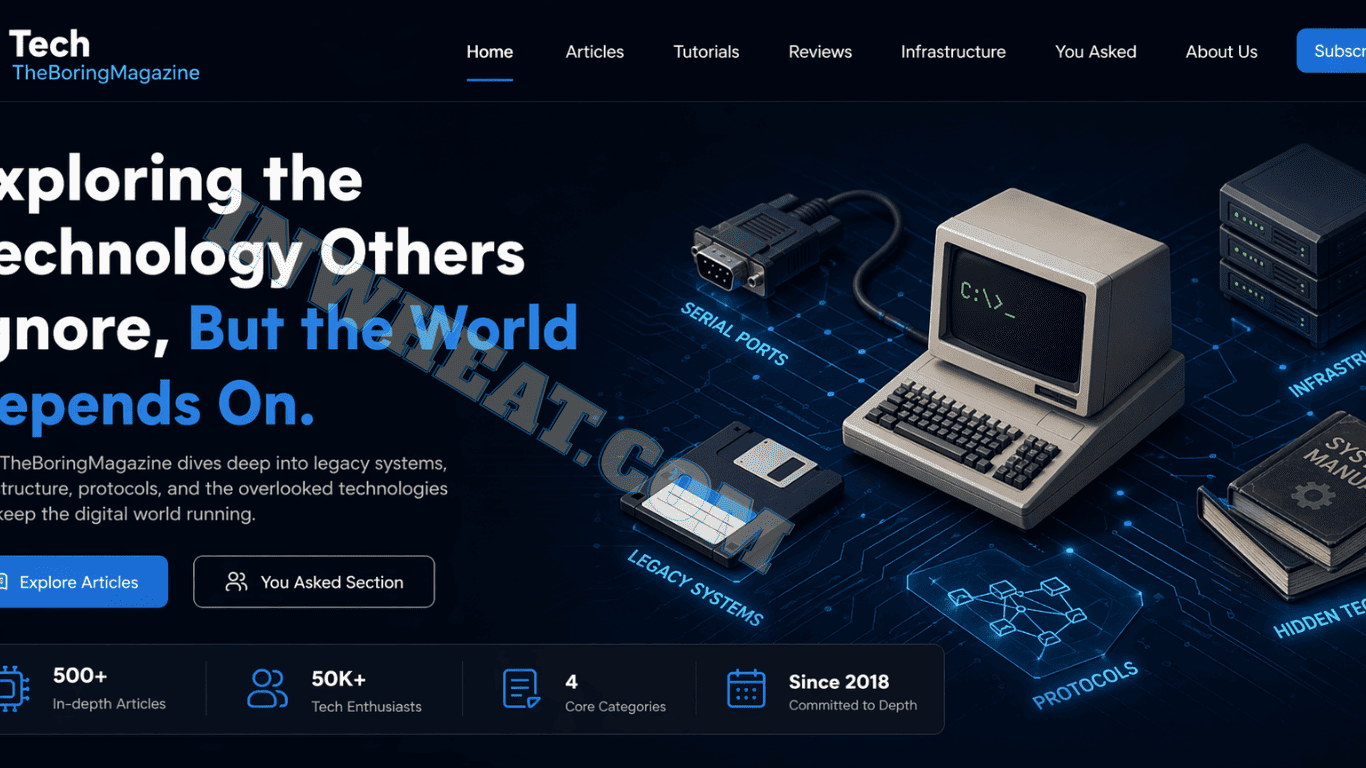
Introduction to Tech TheBoringMagazine
Tech TheBoringMagazine is a distinctive technology publication launched in 2018 with a clear mission: to highlight the foundational systems of technology that are often ignored by mainstream media. While most tech platforms focus on flashy gadgets, trending apps, or viral innovations, this magazine takes a different path by exploring the “boring” layers of technology—such as infrastructure, protocols, and legacy systems—that actually power the digital world.
The founding vision was simple yet powerful: technology that seems uninteresting is often the most important. This mindset attracted a growing audience of developers, engineers, and IT professionals who want to understand how systems truly work under the hood.
Unlike surface-level tech blogs, Tech TheBoringMagazine balances deep technical insight with accessible writing, making complex topics understandable for both beginners and experts. This dual approach is one of the key reasons for its rising popularity in the global tech community.
Origins and Mission of Tech TheBoringMagazine
Tech TheBoringMagazine was founded by a group of former journalists and engineers who recognized a major gap in technology reporting. Mainstream media often focuses on consumer-facing innovations, while ignoring the infrastructure that makes those innovations possible.
The core philosophy is simple: “boring technology powers everything.” Behind every modern application, social platform, or AI tool lies a foundation of protocols, servers, and legacy systems that rarely receive attention.
The editorial mission is to:
- Highlight overlooked technologies
- Preserve understanding of legacy systems
- Explain infrastructure in simple language
- Maintain accuracy through deep research
This commitment to clarity ensures that readers not only learn what technology does but also how and why it works. The magazine bridges the gap between academic knowledge and real-world technical understanding.
Core Content Focus Areas
3.1 Legacy Systems and Forgotten Technology
This section explores outdated but still functional technologies like floppy disks, PalmPilots, and dot matrix printers. While these systems may seem obsolete, they continue to operate in critical environments such as airports, banks, and hospitals.
Understanding these systems helps readers appreciate how modern technology evolved. For example, dot matrix printers are still used because they are reliable, low-cost, and capable of printing multi-part forms, something modern printers cannot easily replace.
3.2 Protocols and Infrastructure Analysis
Tech TheBoringMagazine dives deep into essential internet protocols such as FTP, SMTP, DNS, and serial communication systems. These protocols form the backbone of global communication.
Even though they are decades old, they are still widely used today. Developers and system administrators benefit from understanding how these systems operate, as they are often responsible for maintaining or debugging them in enterprise environments.
3.3 Hidden Technology Ecosystems
This area focuses on invisible but critical systems like routing tables, backend servers, and legacy codebases. These elements ensure that digital services remain functional at scale.
For example, hospital systems and financial institutions often rely on older infrastructure because it prioritizes stability over innovation. Tech TheBoringMagazine explains why these systems persist and how they support modern applications.
Content Strategy and Writing Approach
The magazine follows a structured and research-heavy writing style designed to simplify complex topics. Each article typically follows:
- Introduction (context and relevance)
- Technical explanation (core concept breakdown)
- Real-world examples
- Final summary
Visual aids such as diagrams and ASCII illustrations help readers understand abstract systems more easily. Articles are typically 1000–1500 words long, ensuring depth without overwhelming the reader.
Reader-Driven Content Model
5.1 “You Asked” Section
This section allows readers to submit real questions, which often lead to in-depth investigations. For example, a simple question like “Why do airports still use dot matrix printers?” becomes a full technical exploration.
This model encourages curiosity and ensures content is driven by real-world needs rather than trends.
5.2 Community Engagement
Readers actively participate through:
- Forums
- Feedback systems
- Surveys
- Technical discussions
This interactive structure builds a strong knowledge-sharing ecosystem.
Audience Demographics and Reader Base
- Developers: 42%
- System Administrators: 28%
- Security Analysts: 18%
- Students: 12%
Why Different Audiences Read It
Developers gain system design insights, system admins learn troubleshooting techniques, security analysts identify vulnerabilities in legacy systems, and students gain foundational understanding of technology evolution.
Hardware, Software & Digital Tools Coverage
7.1 Hardware Reviews
Covers laptops, smartphones, and peripherals with a focus on performance, durability, and real-world usability.
7.2 Software Evaluation
Analyzes operating systems and applications based on usability, compatibility, and security.
7.3 Productivity Tools
Reviews cloud platforms and SaaS tools that improve business efficiency and collaboration.
Emerging Technology Coverage
8.1 Artificial Intelligence & Machine Learning
Focuses on practical AI applications such as healthcare diagnostics and automation systems, avoiding hype-driven narratives.
8.2 Cloud Computing
Explores cloud infrastructure, security protocols, and remote collaboration technologies shaping modern work environments.
Educational Resources and Tutorials
The platform provides:
- Step-by-step guides
- Installation tutorials
- Optimization techniques
- Video-based learning content
These resources support both beginners and professionals in building technical skills.
Design Philosophy and User Experience
The website design follows a minimalist and clean layout, prioritizing readability. Infographics and ASCII visuals enhance understanding, making complex topics more digestible.
Tech TheBoringMagazine vs Mainstream Tech Media
Unlike mainstream tech journalism that focuses on trends and product launches, this platform prioritizes foundational knowledge. It explains how systems work instead of promoting hype.
This approach builds greater trust and credibility among technical audiences.
Community Features and Engagement Methods
- Forums for peer support
- Live webinars
- Case studies
- Interactive discussions
These features create a collaborative learning environment.
Editorial Standards and Quality Assurance
All content undergoes:
- Fact-checking
- Technical review
- Source verification
Transparency is maintained through clear disclosure of sponsorships and affiliations.
Business and Professional Applications
The magazine supports:
- Corporate decision-making
- Industry research
- IT training programs
- Strategic planning
Platform Development and Future Roadmap
15.1 Upcoming Features
- Mobile app
- Podcasts
- AI-based recommendations
15.2 Expansion Areas
- Quantum computing
- Blockchain systems
- Augmented reality
15.3 Global Reach
Localization and international contributor networks are expanding rapidly.
Sustainability and Technology Ethics
The platform promotes:
- Green computing
- Energy-efficient hosting
- Ethical AI development
Future Outlook of Tech TheBoringMagazine
The future focuses on combining foundational knowledge with modern multimedia formats, ensuring long-term relevance in a rapidly evolving tech landscape.
FAQs About Tech TheBoringMagazine
What is it?
A tech publication focused on infrastructure and legacy systems.
Who reads it?
Developers, engineers, analysts, and students.
How is it different?
It avoids hype and focuses on technical depth.
Does it accept contributions?
Yes, through editorial submission guidelines.
Why is it valuable?
It explains how real systems work behind modern technology.
Conclusion
Tech TheBoringMagazine proves that “boring” technology is actually the foundation of the digital world. By focusing on infrastructure, legacy systems, and deep technical analysis, it delivers unmatched educational value.
In a world obsessed with trends, this platform reminds readers that true innovation depends on understanding the systems beneath the surface. For developers, students, and professionals alike, it serves as a powerful learning resource that bridges past, present, and future technology.












Leave a Reply